
Como Caminamos
A collaborative project by Jessica Monroe Valentín and Daniel García Ordaz exploring place, memory, language, ecology, and lived experience in the Rio Grande Valley.
This project grows out of an ongoing written exchange between painter Jessica Monroe Valentín and poet Daniel García Ordaz. Through conversation, images, and reflection, we use collaborative autoethnography to think through how personal experience connects to larger histories, communities, and landscapes. This page offers background on the project, introduces the artists, and invites community participation.
-
Collaborative autoethnography is a way of learning through attention to lived experience, reflection, and dialogue.
In this project, that means we write with and through our own experiences while also listening closely to each other. The work moves between the personal and the collective: family histories, language, politics, ecology, class, identity, and everyday life in the Rio Grande Valley all become part of the conversation.
Rather than treating theory as something separate from lived reality, we use it as a tool to better understand what is already present in our lives and communities.
-
This collaboration takes shape through an evolving shared document in which writing, images, and ideas are layered over time. Instead of exchanging polished responses one at a time, we return to the same space again and again, adding, interrupting, revising, and responding across multiple passes.
The result is not a single argument or finished statement. It is a living record of thought in motion: a space where resonance, contrast, memory, and inquiry remain visible.
For the public event, we are opening that process outward. We want to create space for conversation and for community members to reflect on their own experiences of place, culture, language, inheritance, and belonging.
-
The Rio Grande Valley holds many overlapping histories and ways of seeing. It is shaped by border realities, migration, family memory, ecological change, labor, language, faith, inequality, and deep cultural knowledge. This project begins from the idea that people already carry important forms of knowledge about these realities in their bodies, memories, and daily lives.
By creating a space for reflection and exchange, we hope to honor those ways of knowing and to make room for nuance, contradiction, and connection. The work builds on a longer tradition of artists and writers from this region, including Gloria Anzaldúa and Mark Menjívar, who explore the complexity of border identity and lived experience. It feels especially relevant in a time of ongoing political and social tension in the United States.
Meet the artists
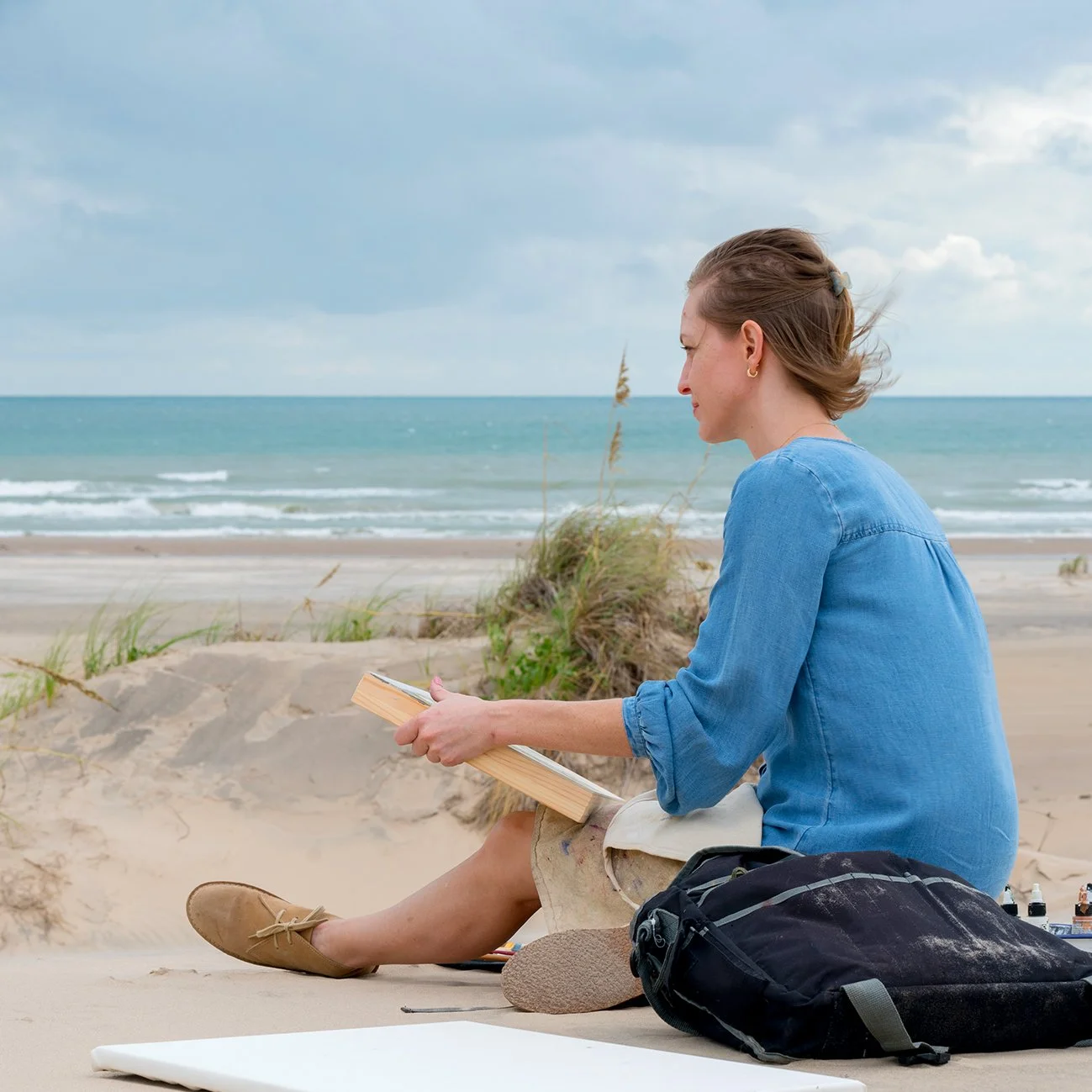
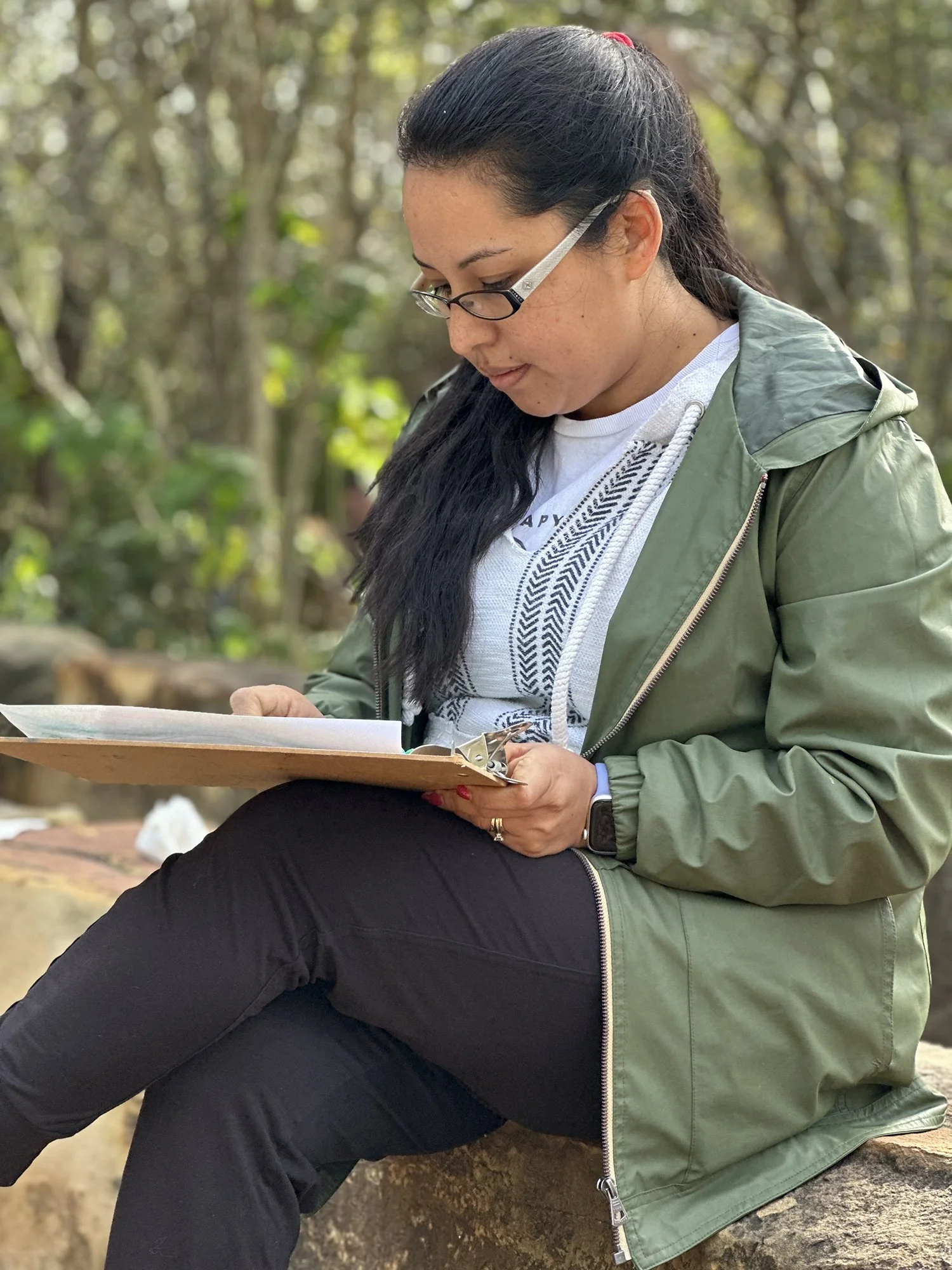
Jessica Monroe Valentín is a South Texas artist whose work is rooted in landscape, perception, ecology, and embodied attention. Through painting, drawing, and research-based projects, she explores how lived experience, environment, and systems of relation shape the way we understand ourselves and the world. For this project, Jessica Monroe includes Valentín, her mother’s maiden name, as a way of acknowledging her Puerto Rican heritage and the project’s broader focus on identity, place, and cultural inheritance.
Painter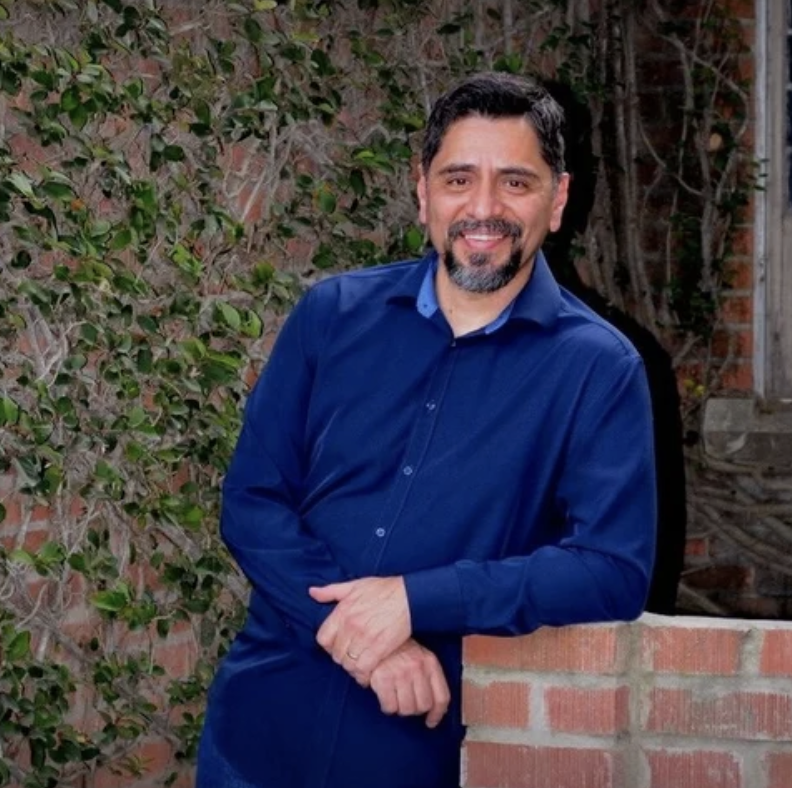
Daniel García Ordaz is a bilingual poet, educator, and former McAllen Poet Laureate whose work engages language, cultural identity, and the borderlands experience. Writing across English and Spanish, his practice moves through rhythm, code-switching, and voice, exploring how language shapes memory, community, and ways of knowing. His work reflects a deep commitment to the Rio Grande Valley and to creating spaces for dialogue, expression, and shared cultural experience.
PoetArtworks Inspired
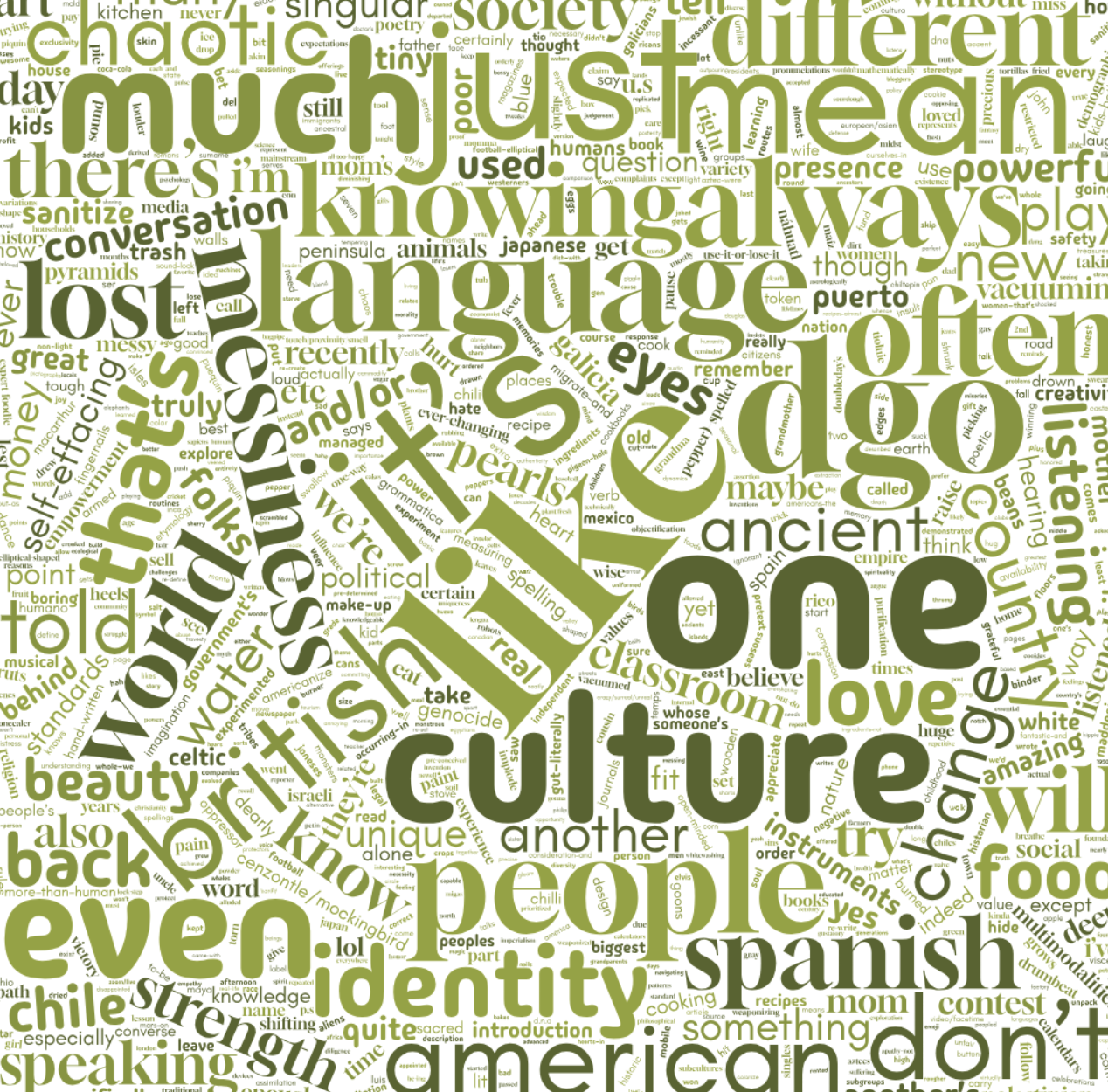
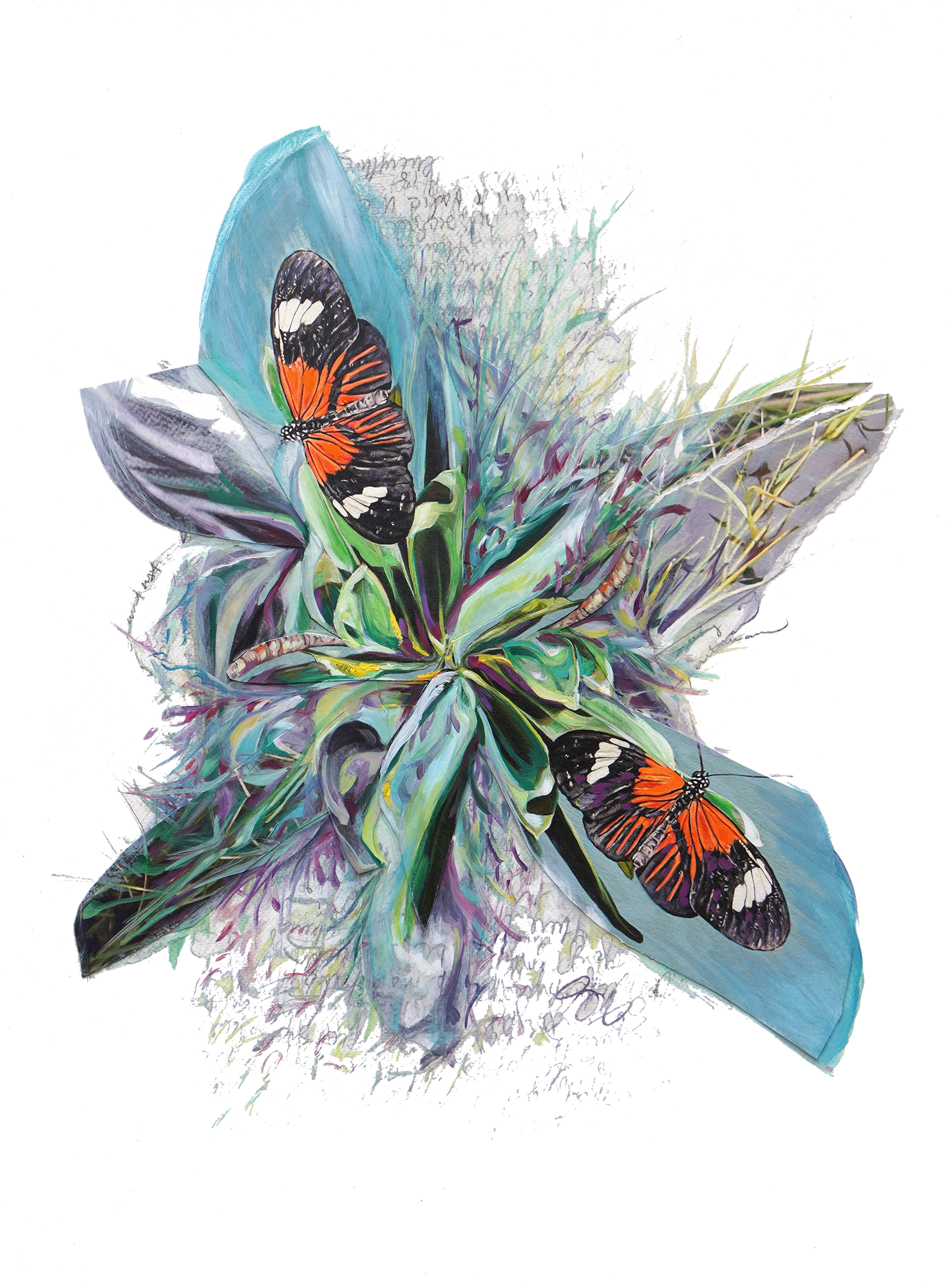
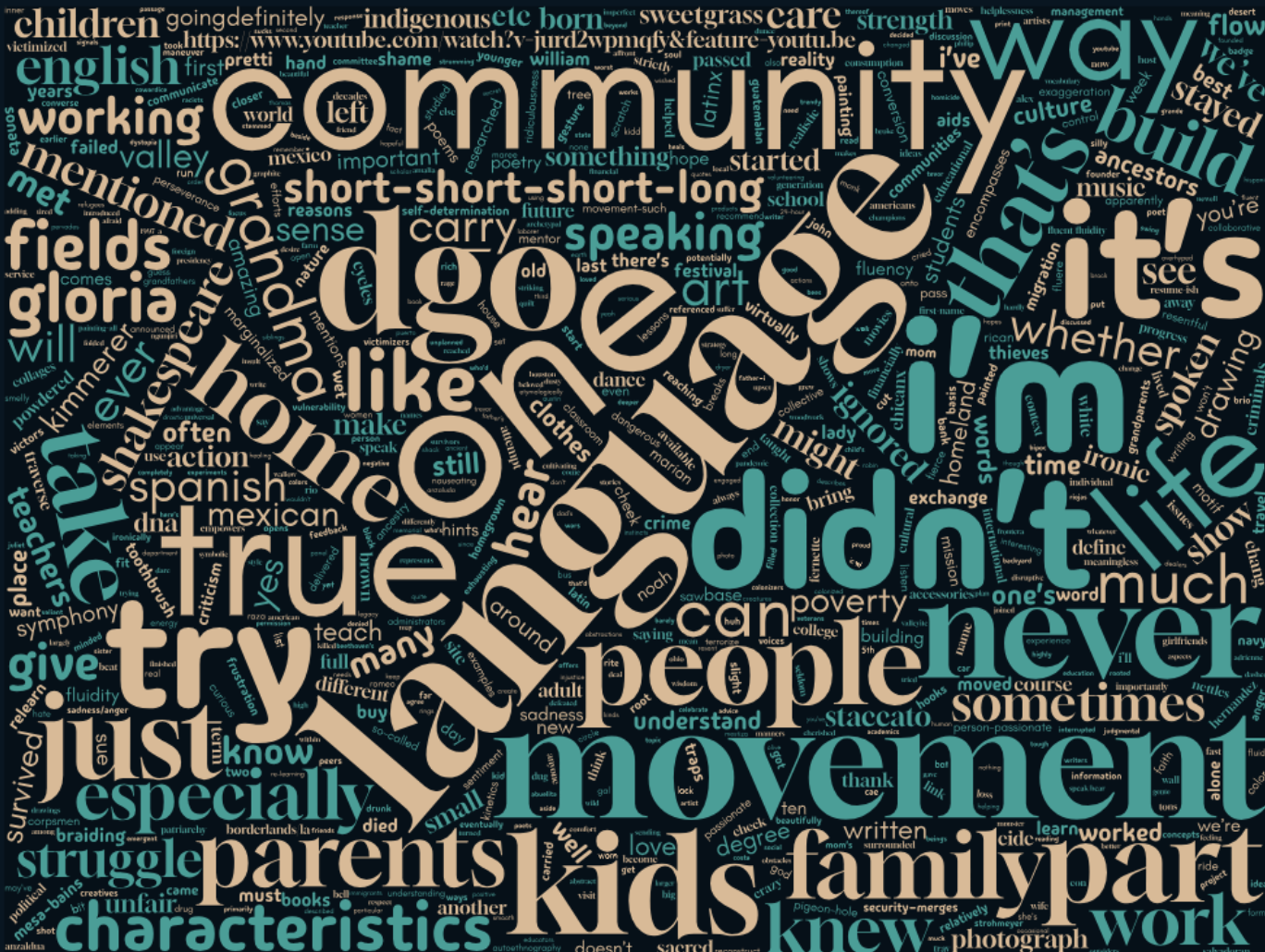
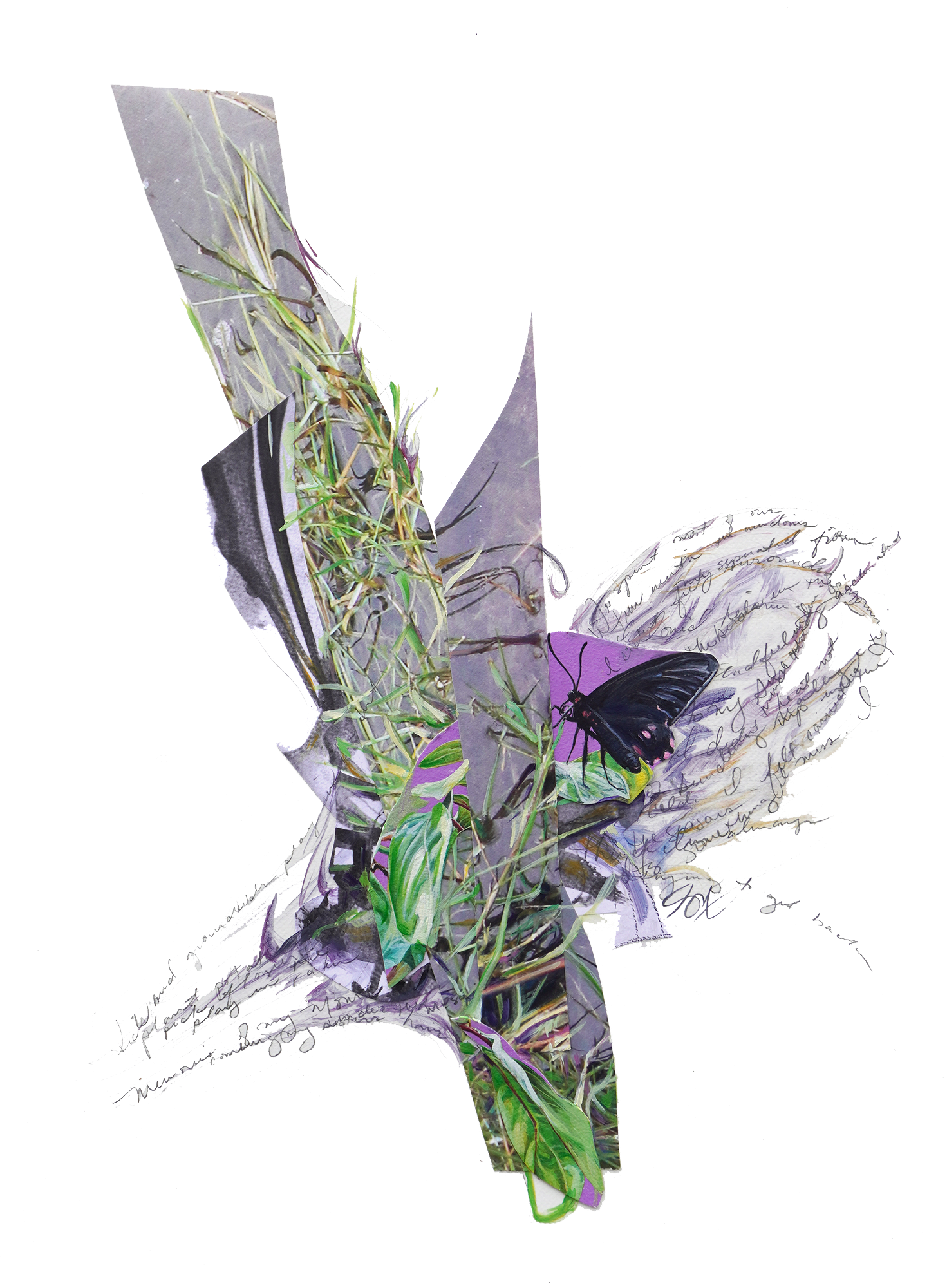
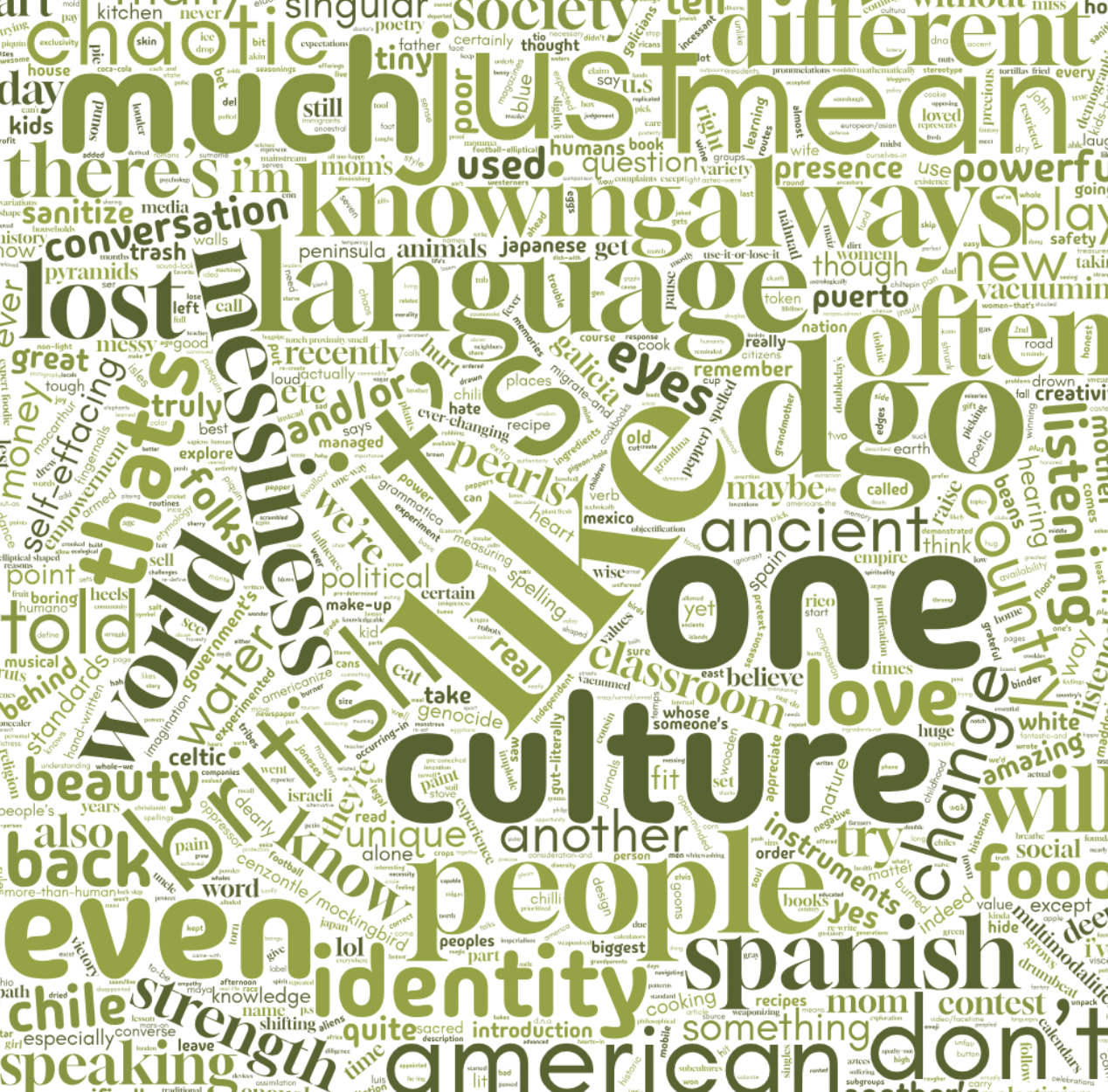
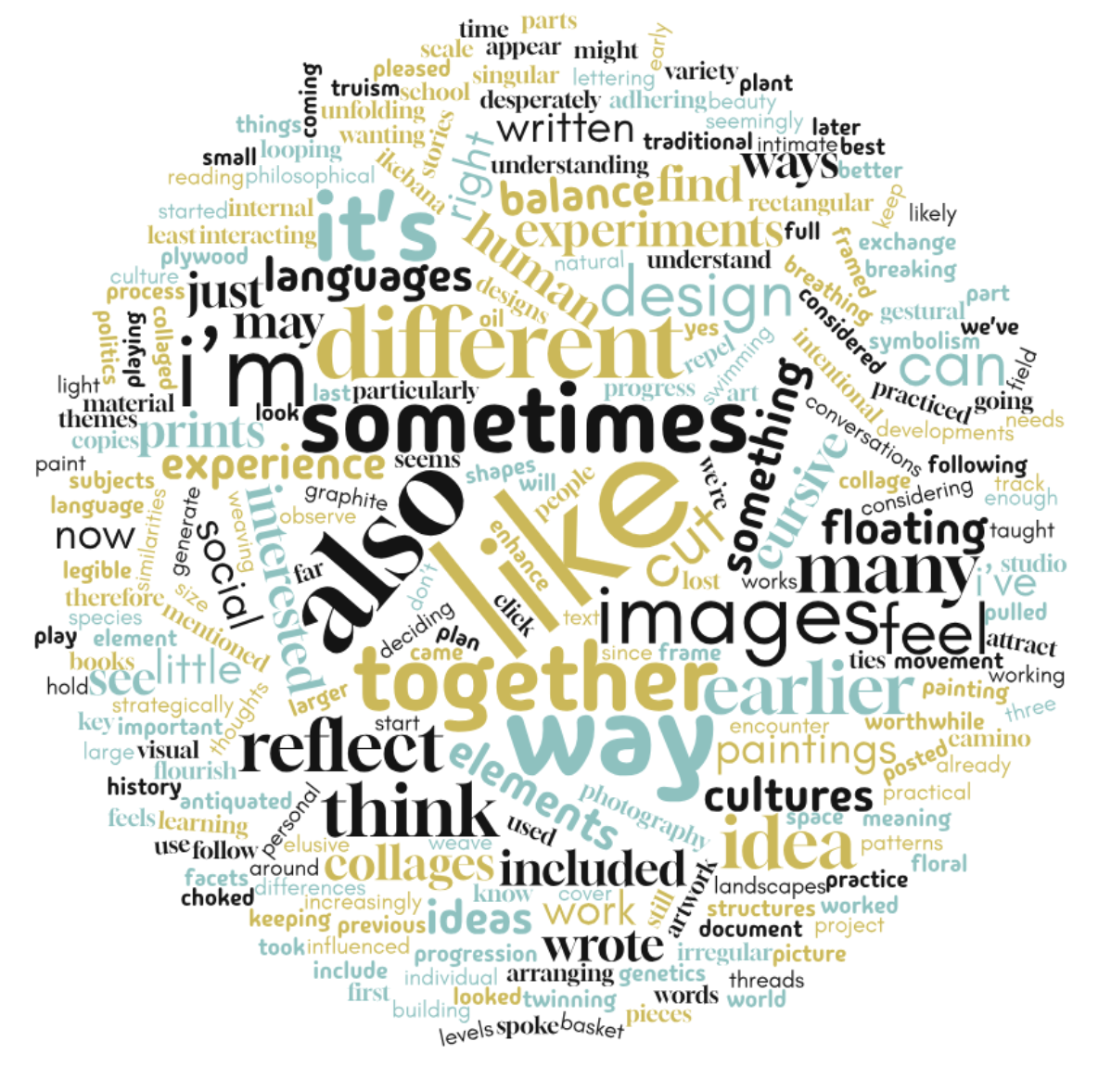
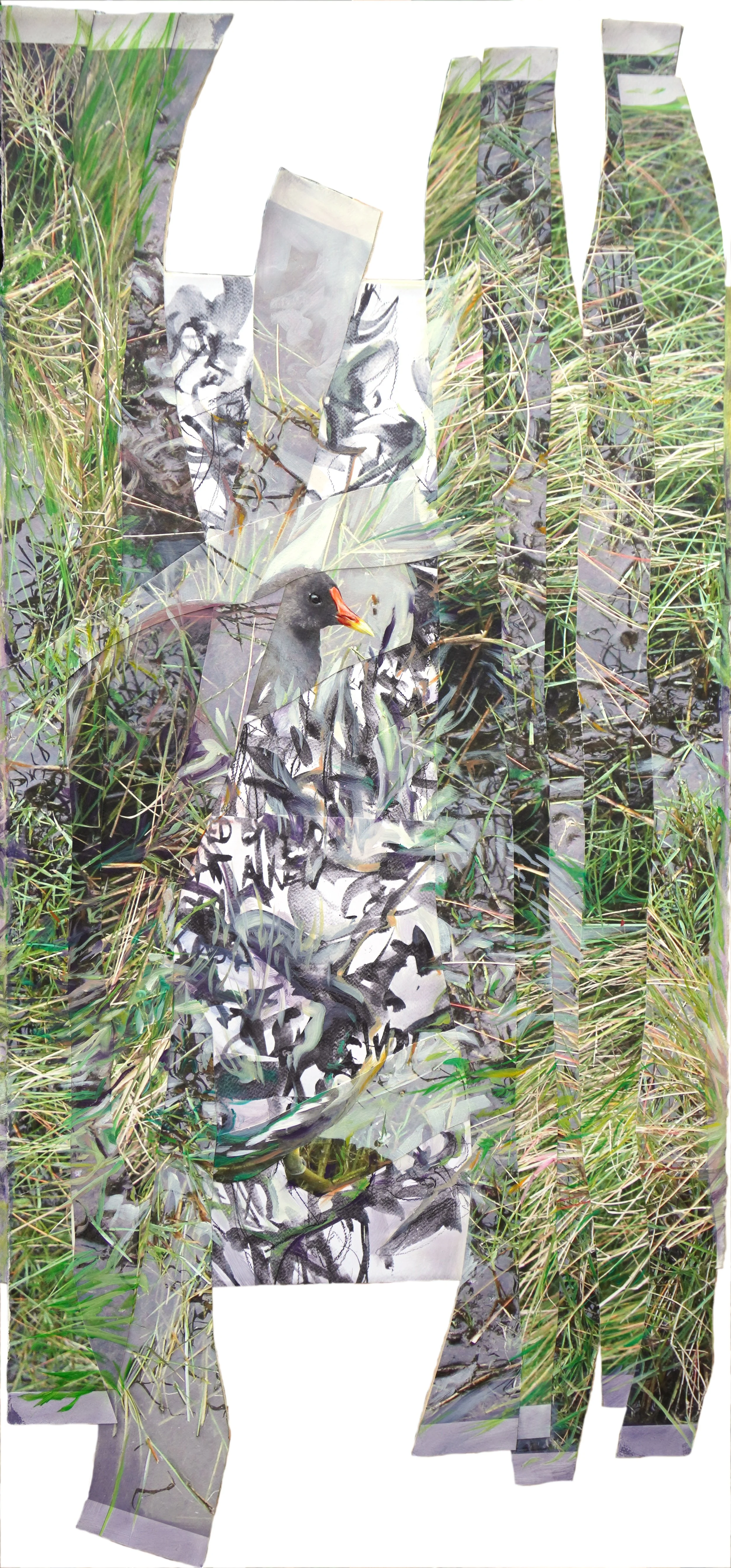
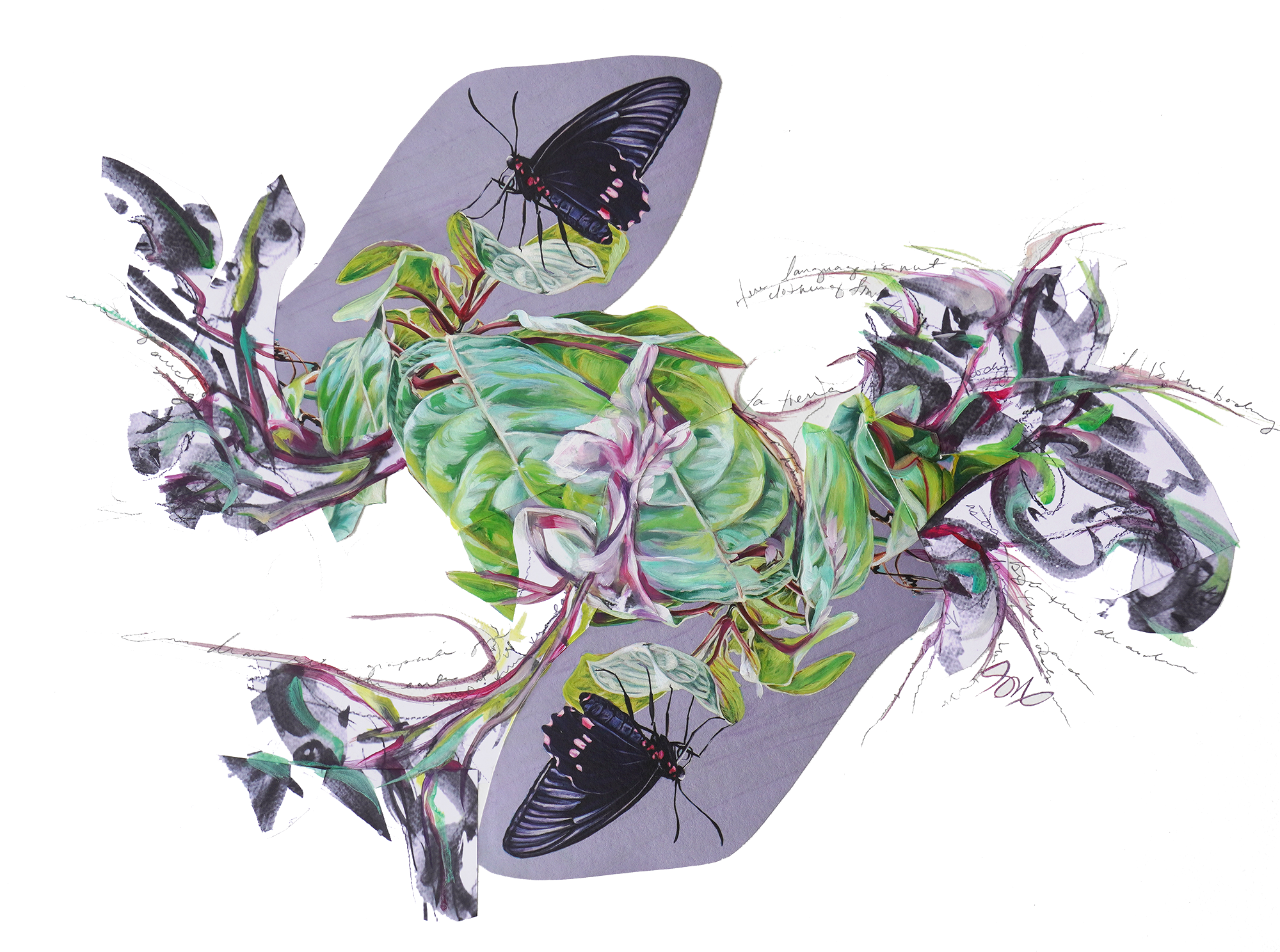
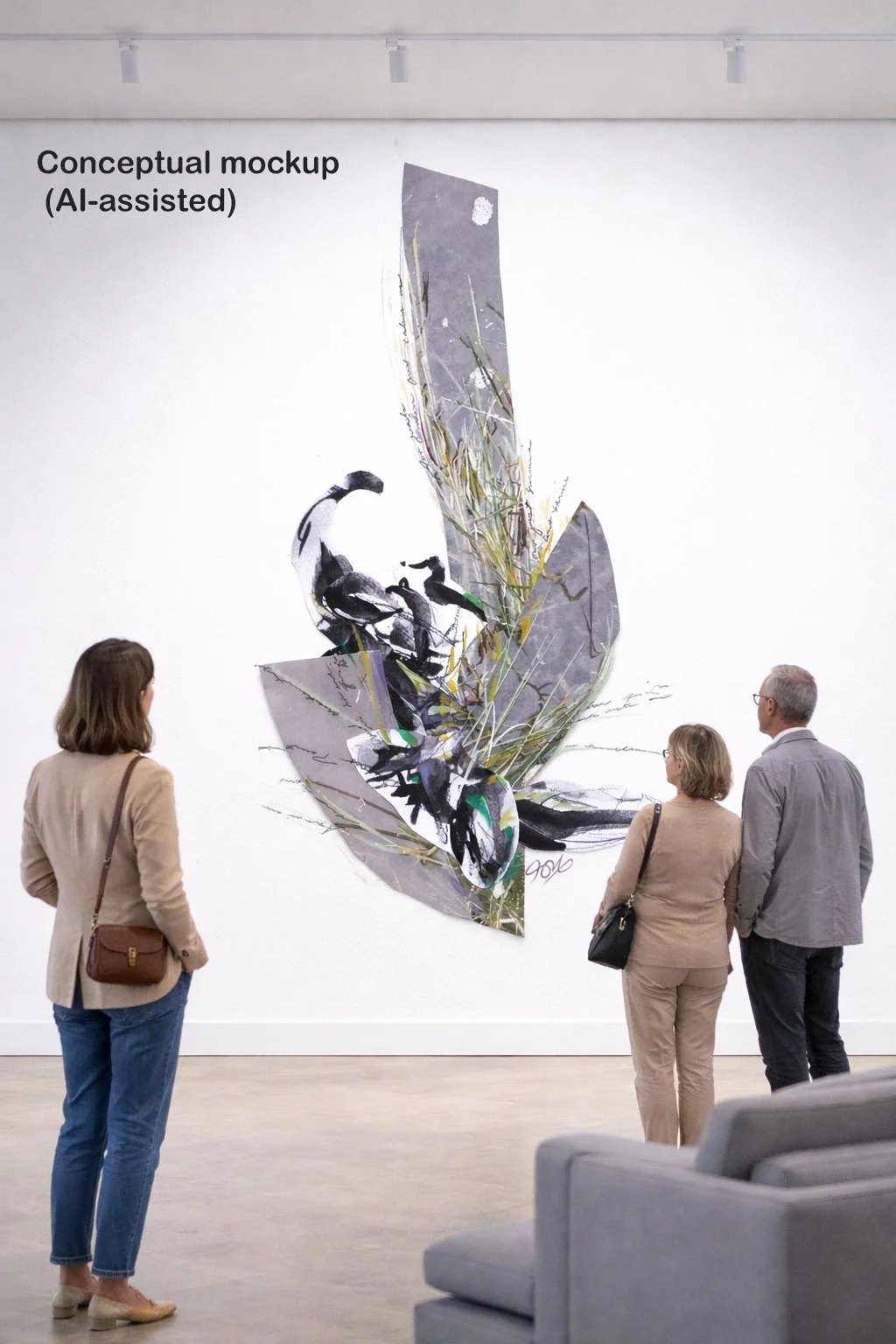
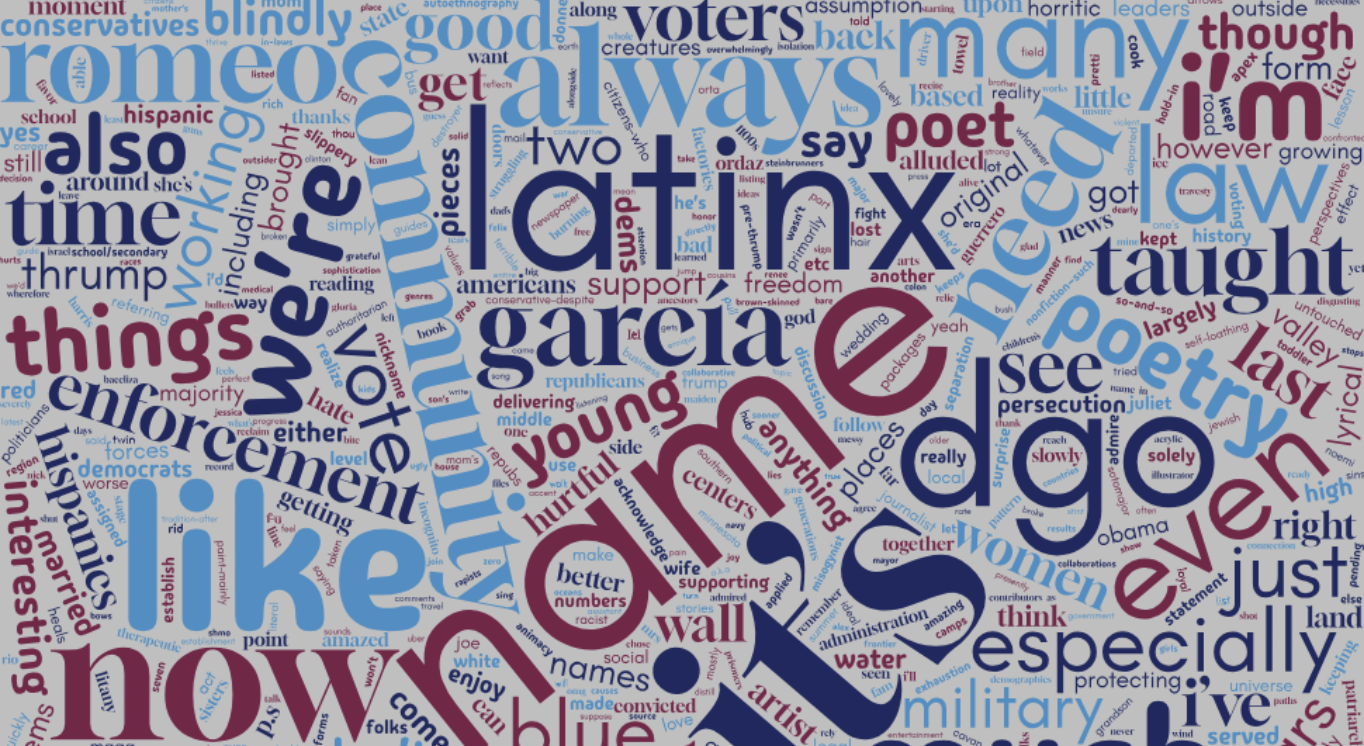
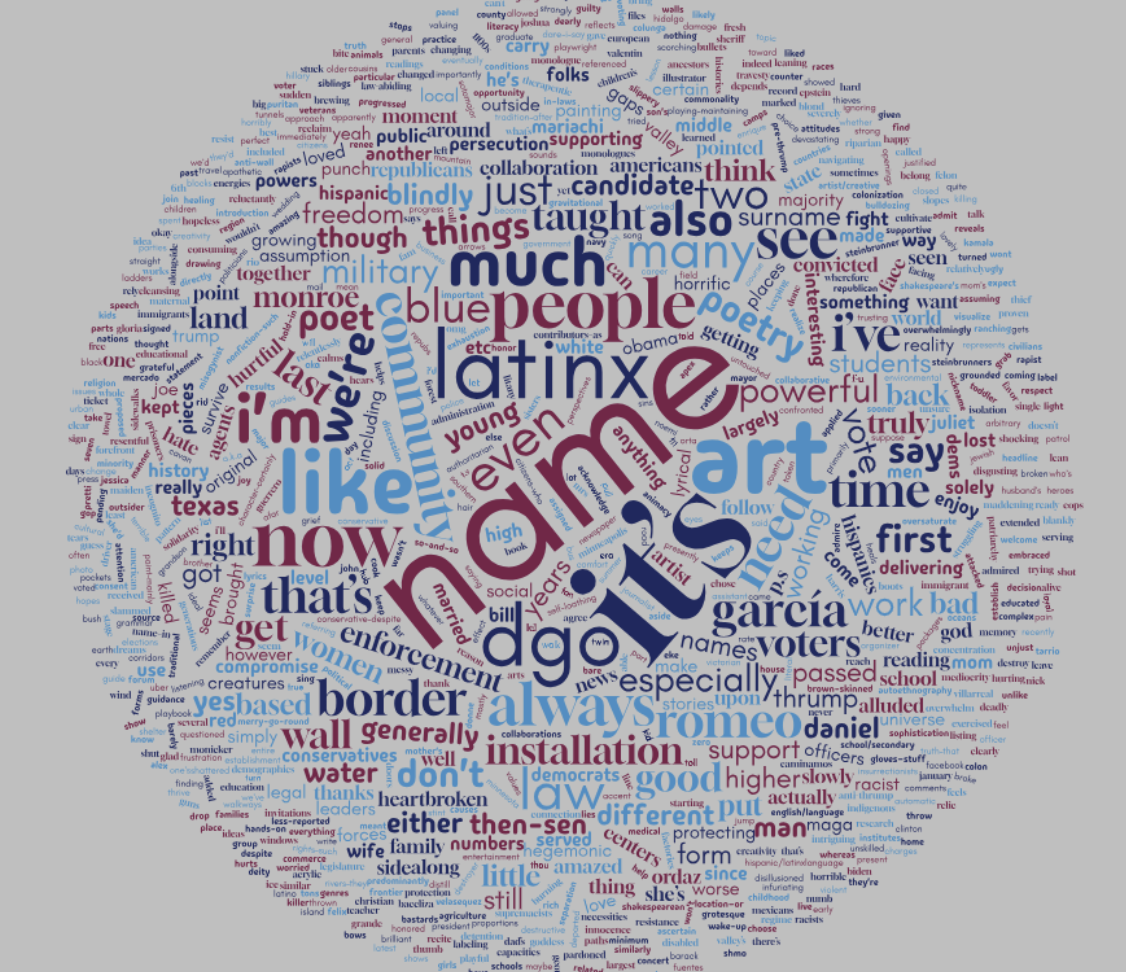
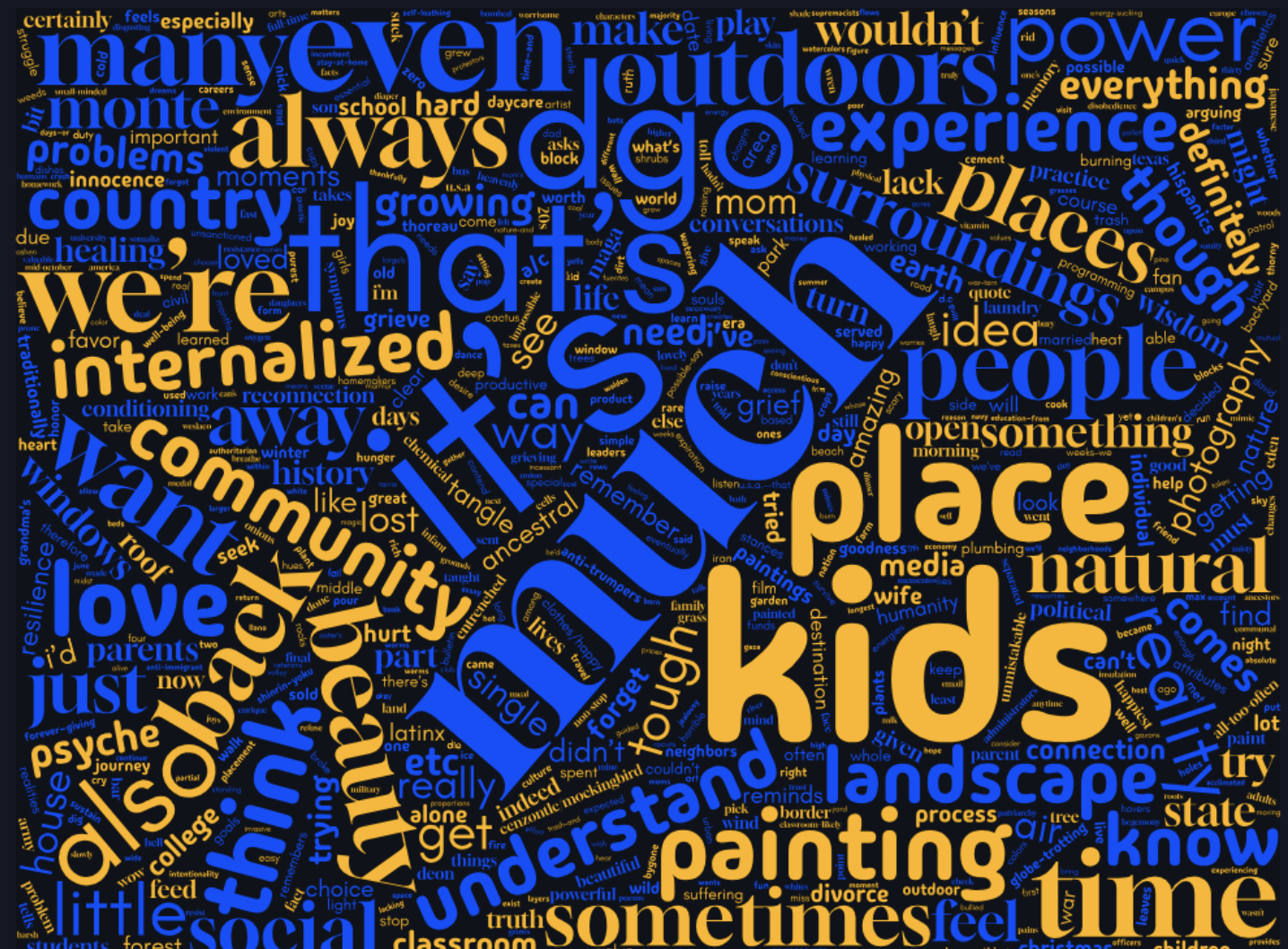
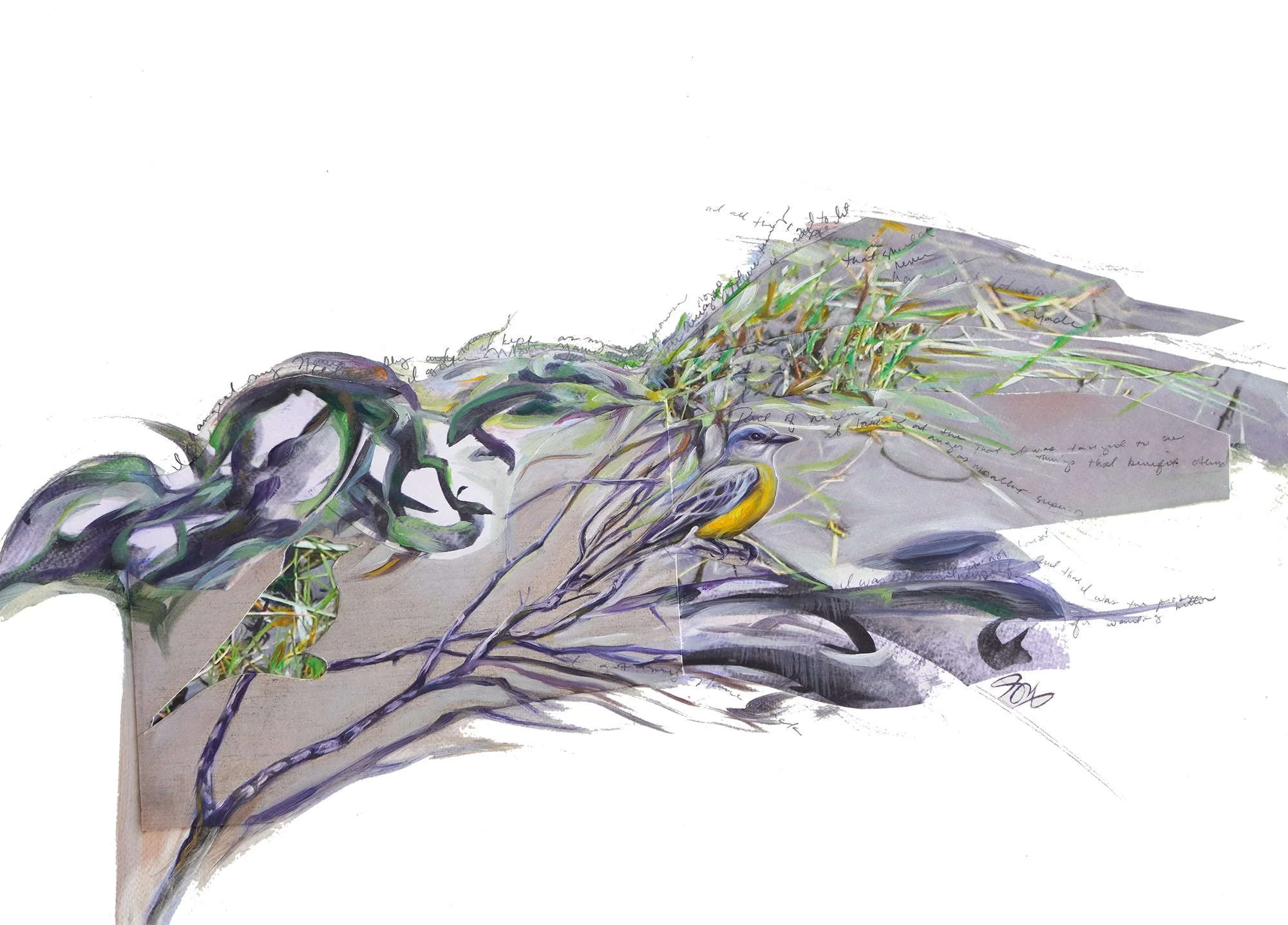
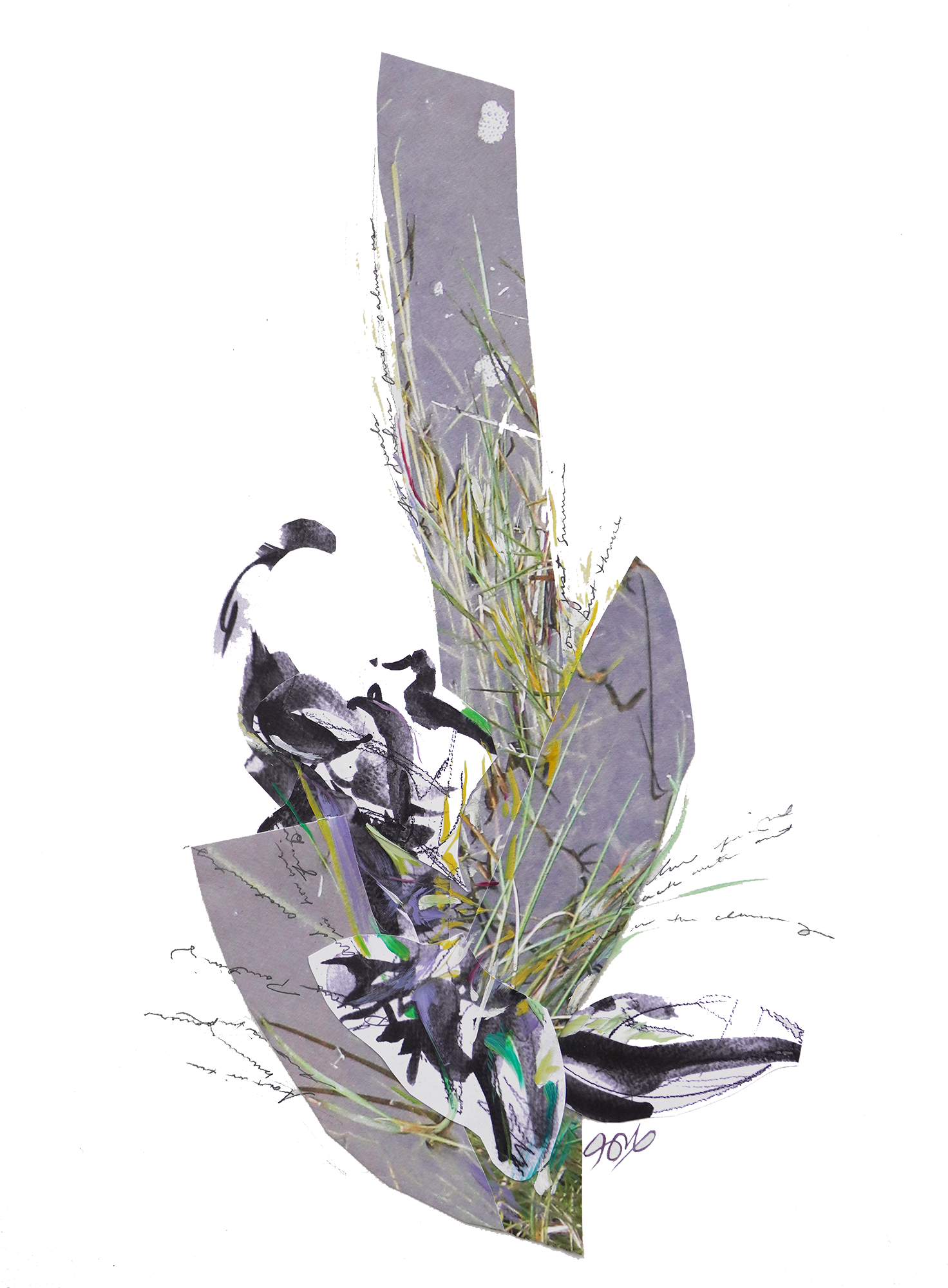
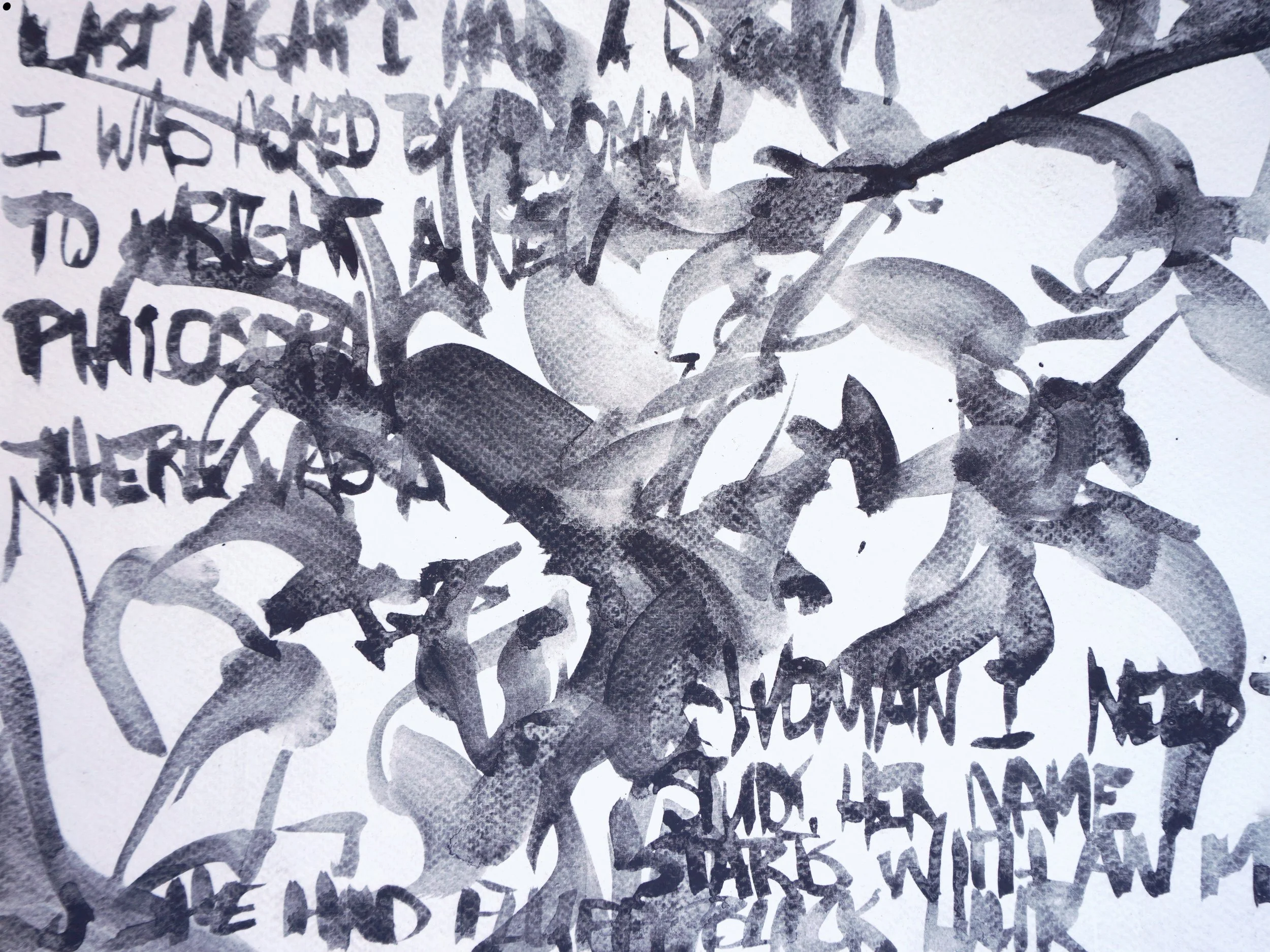
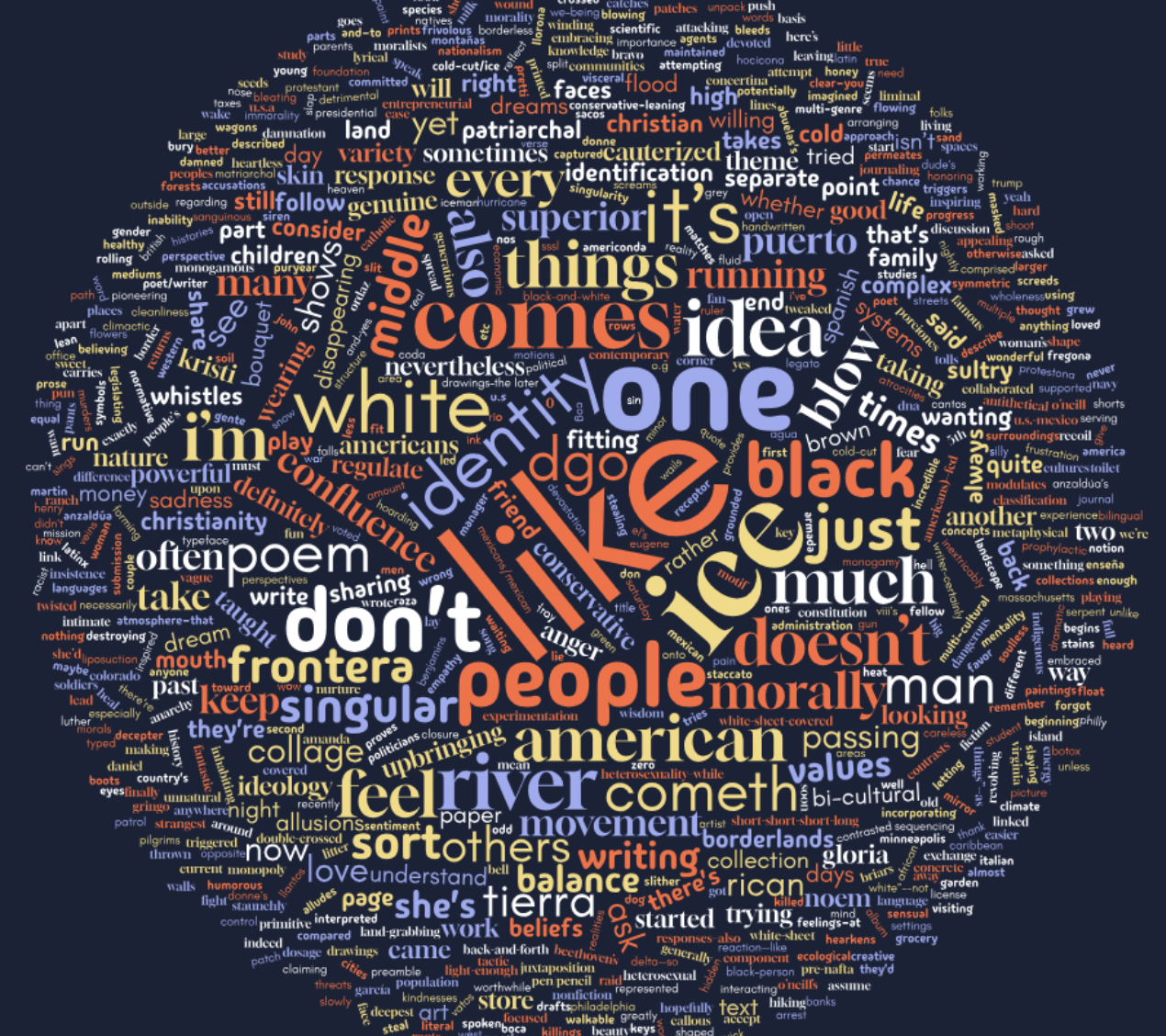
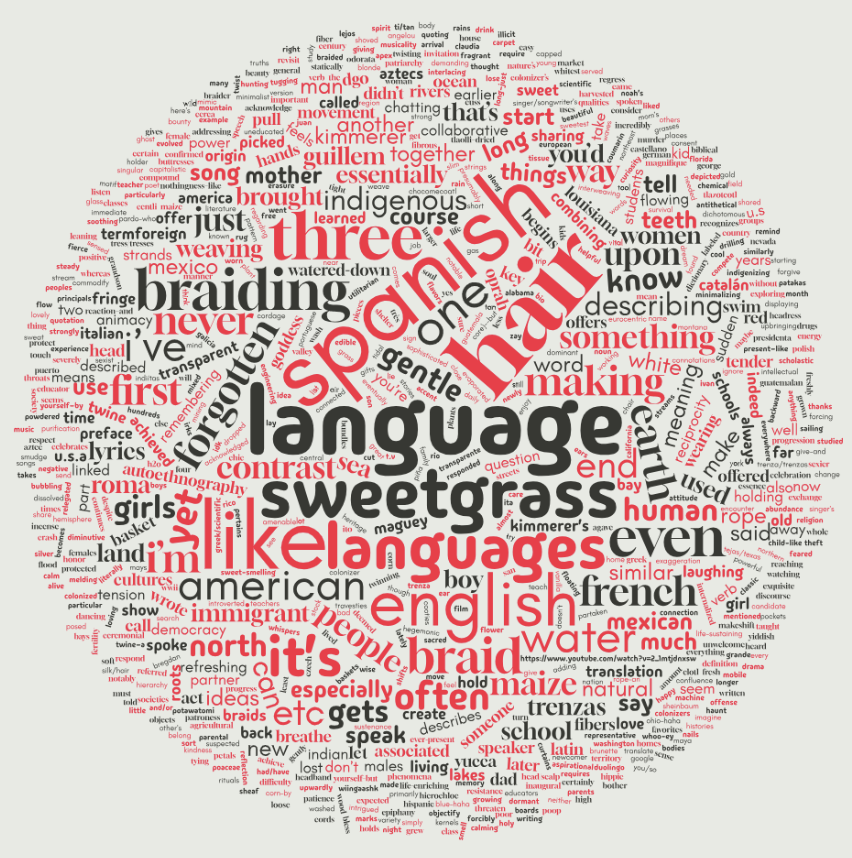
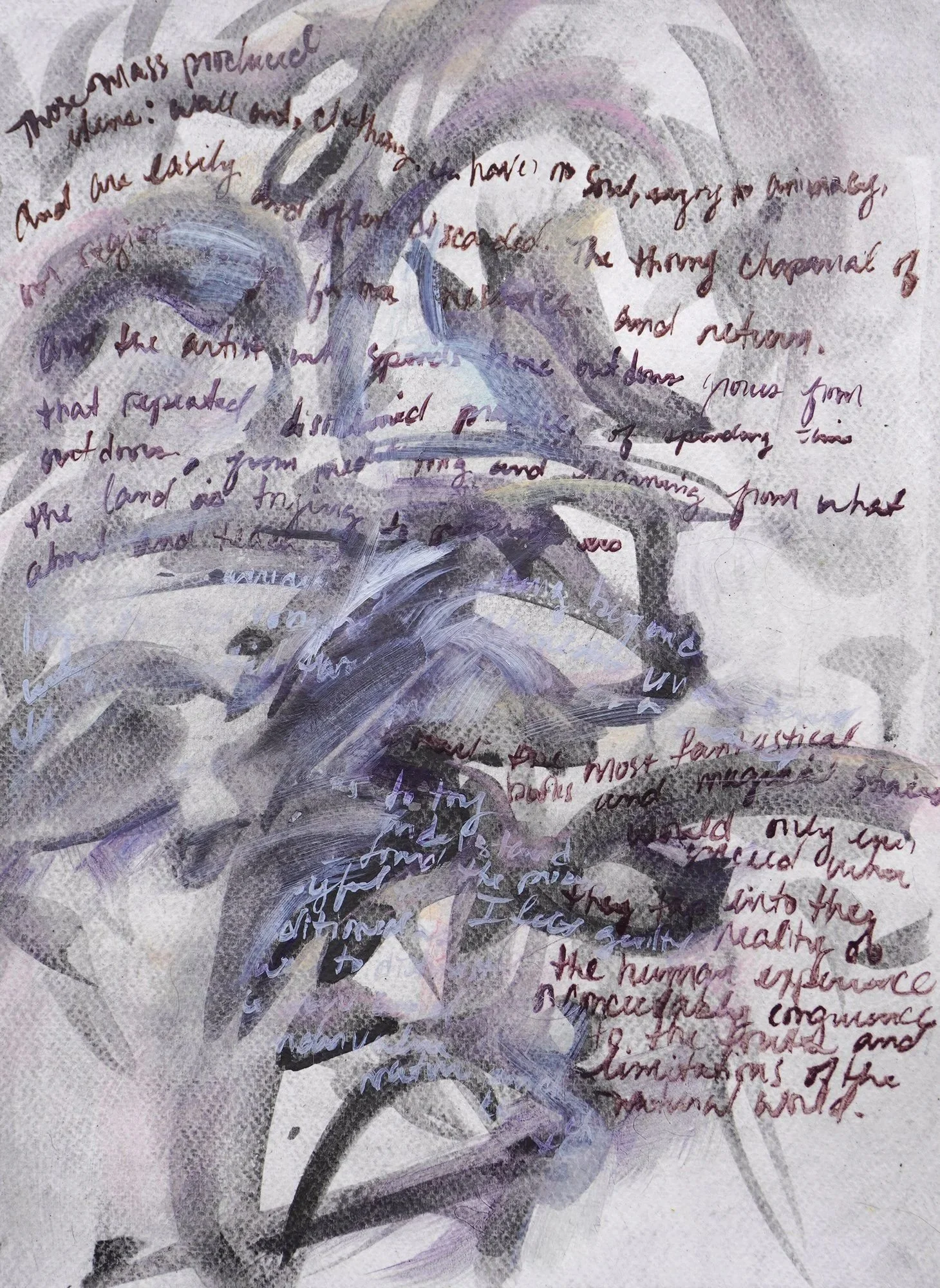
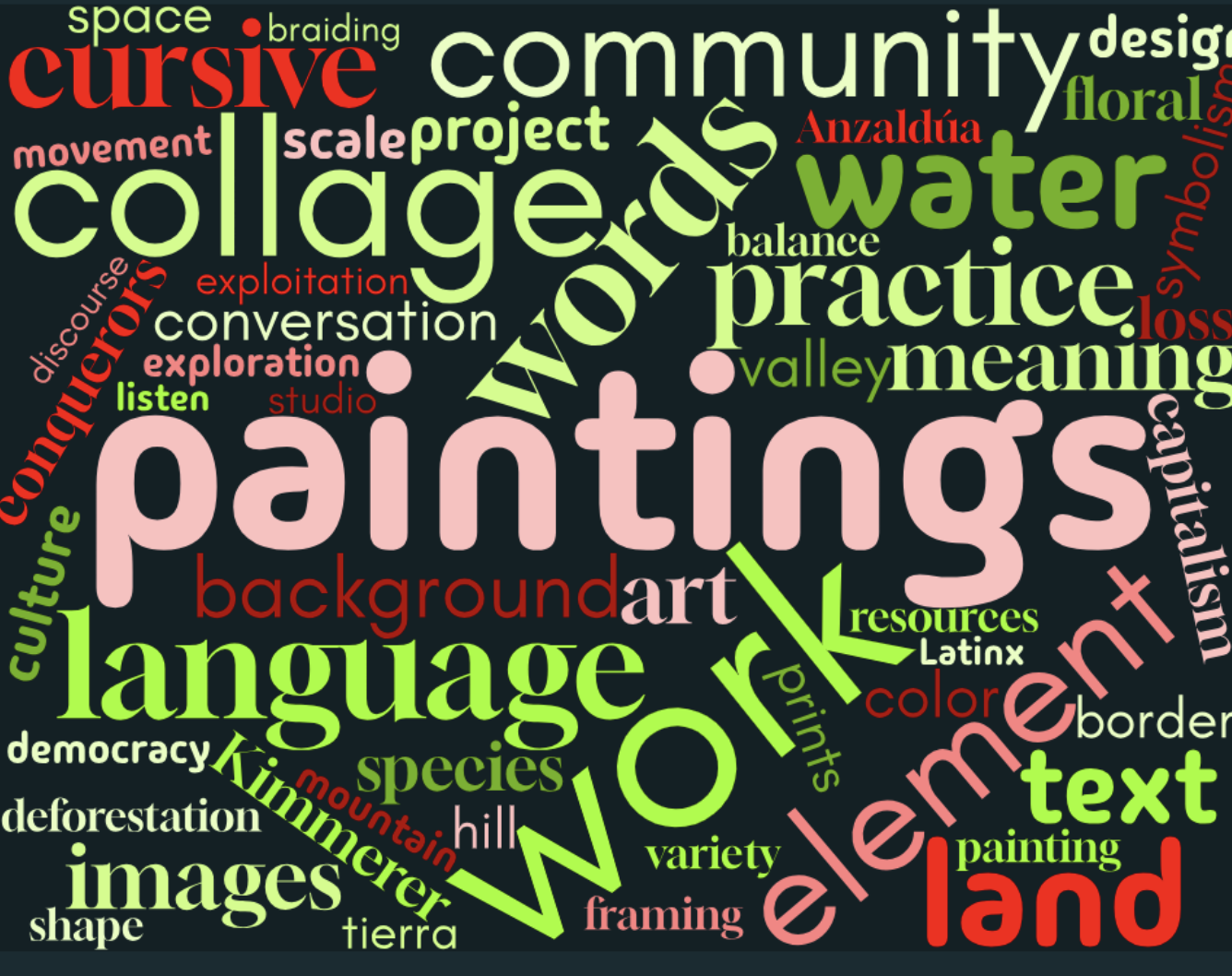
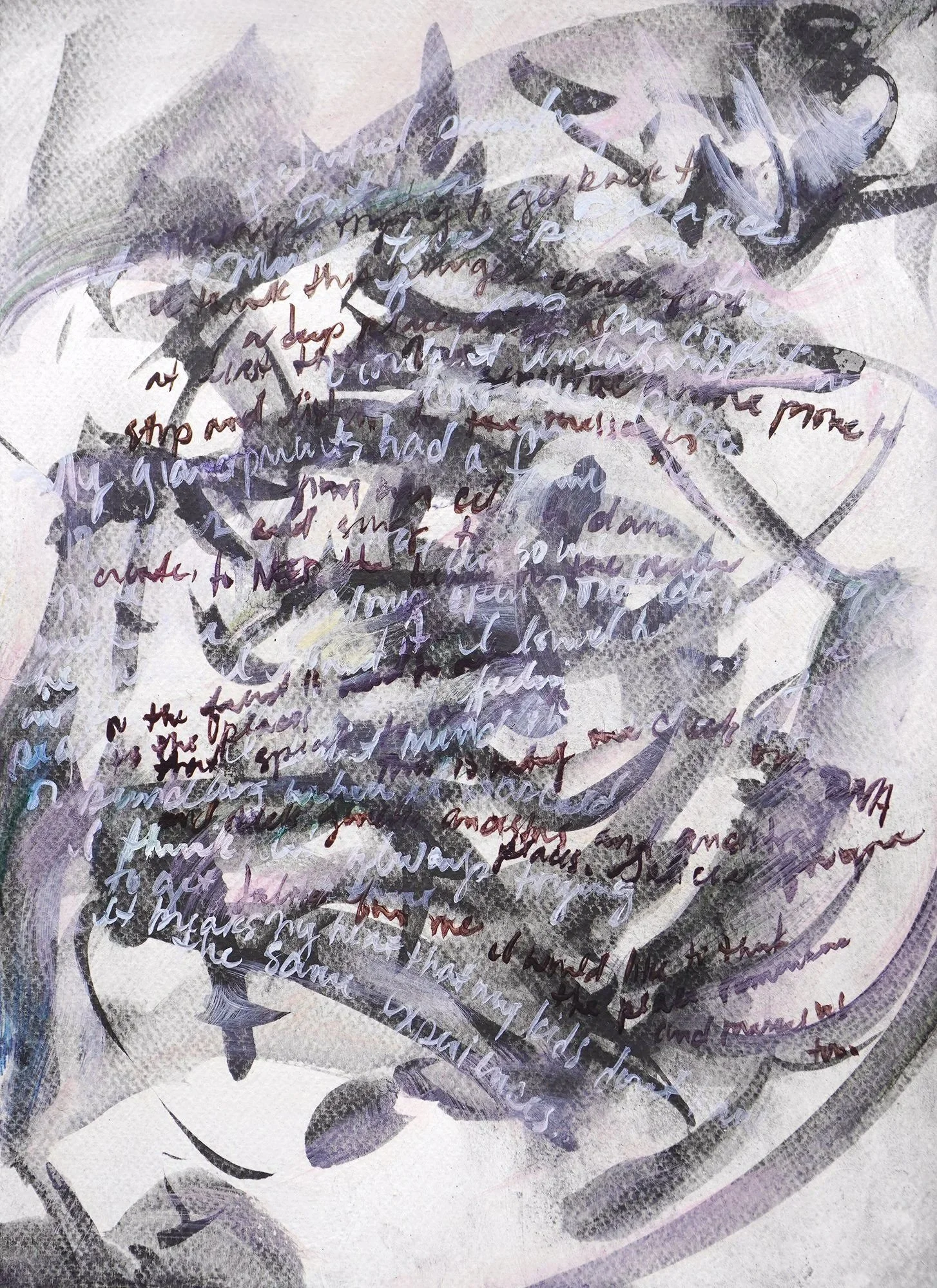
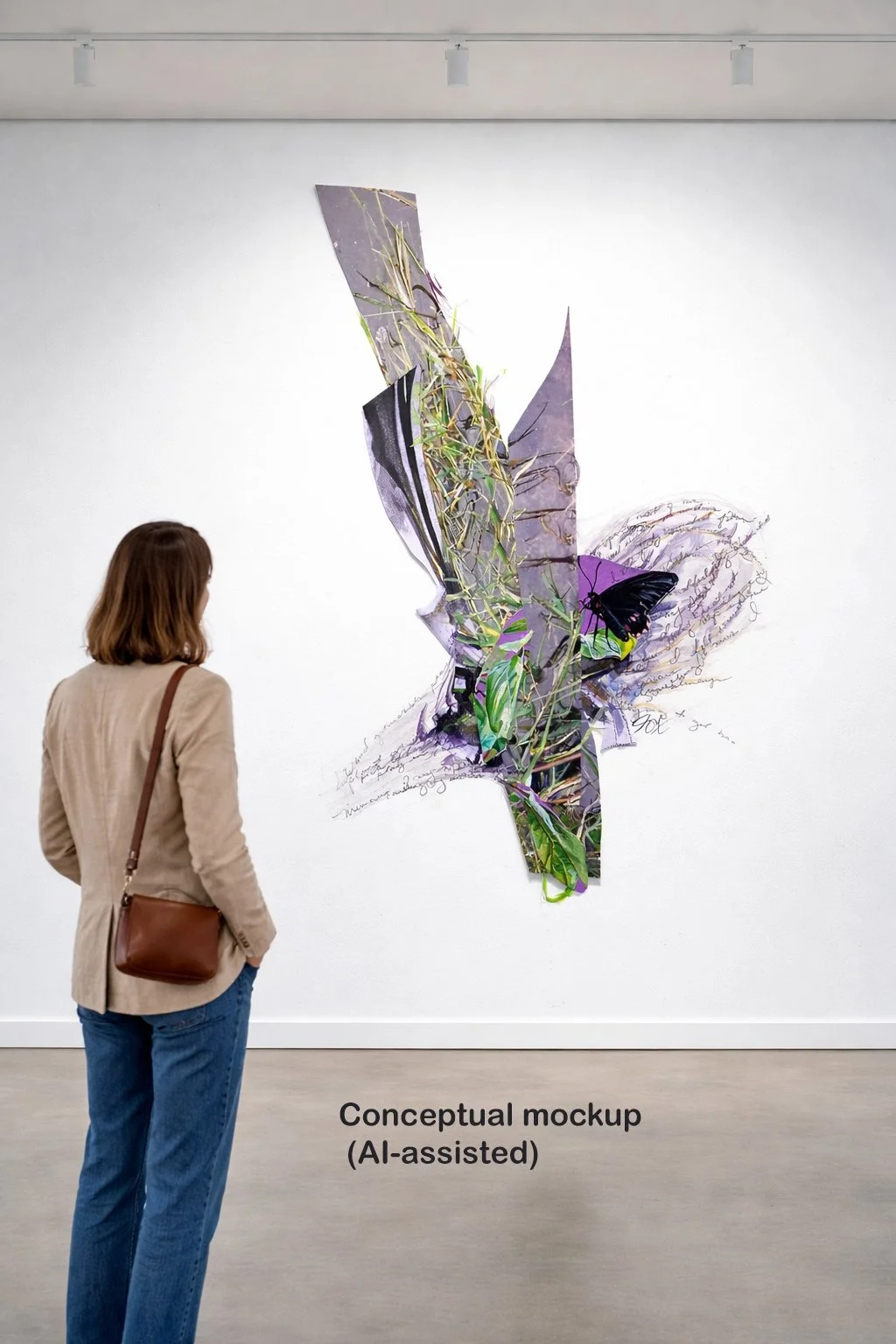
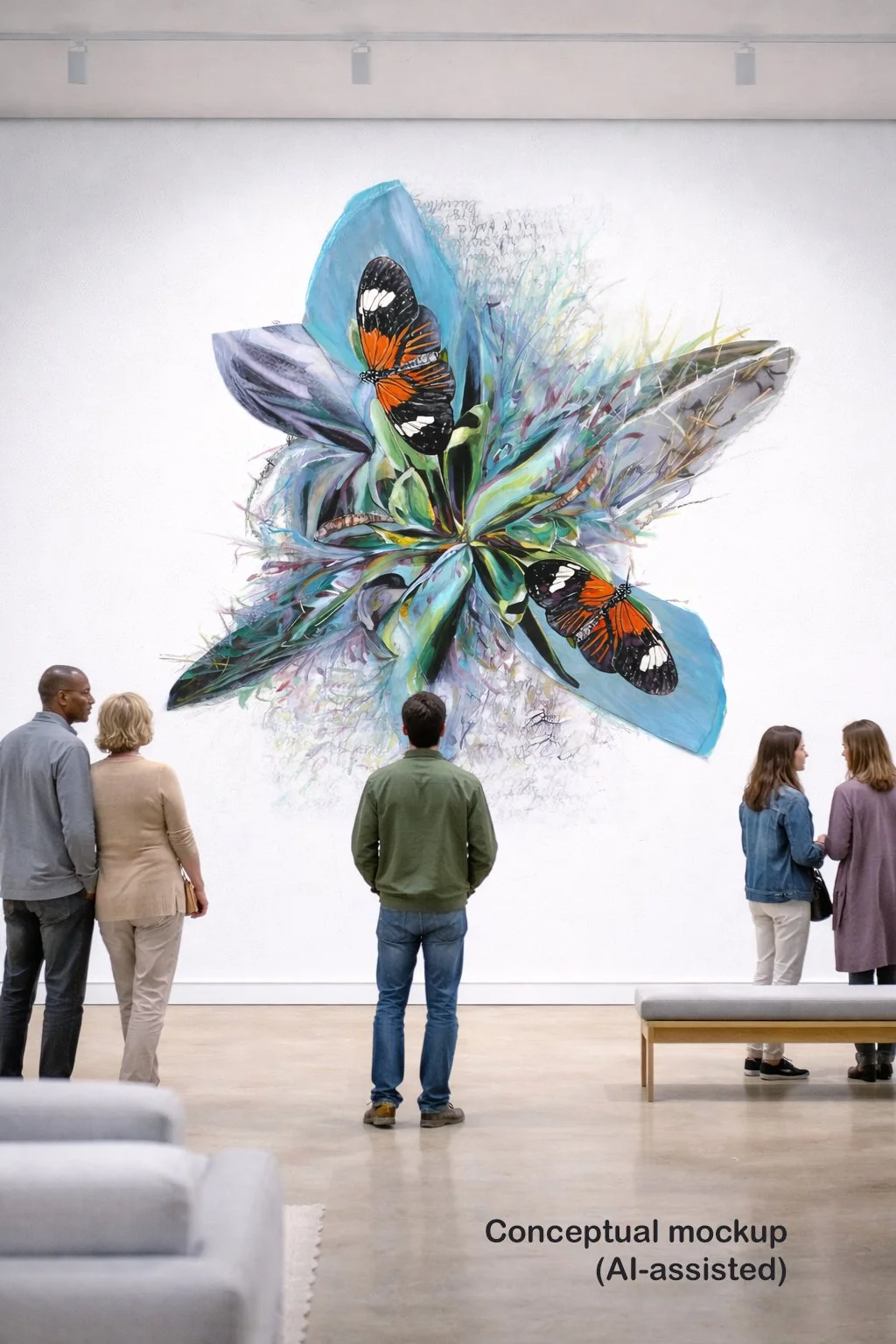
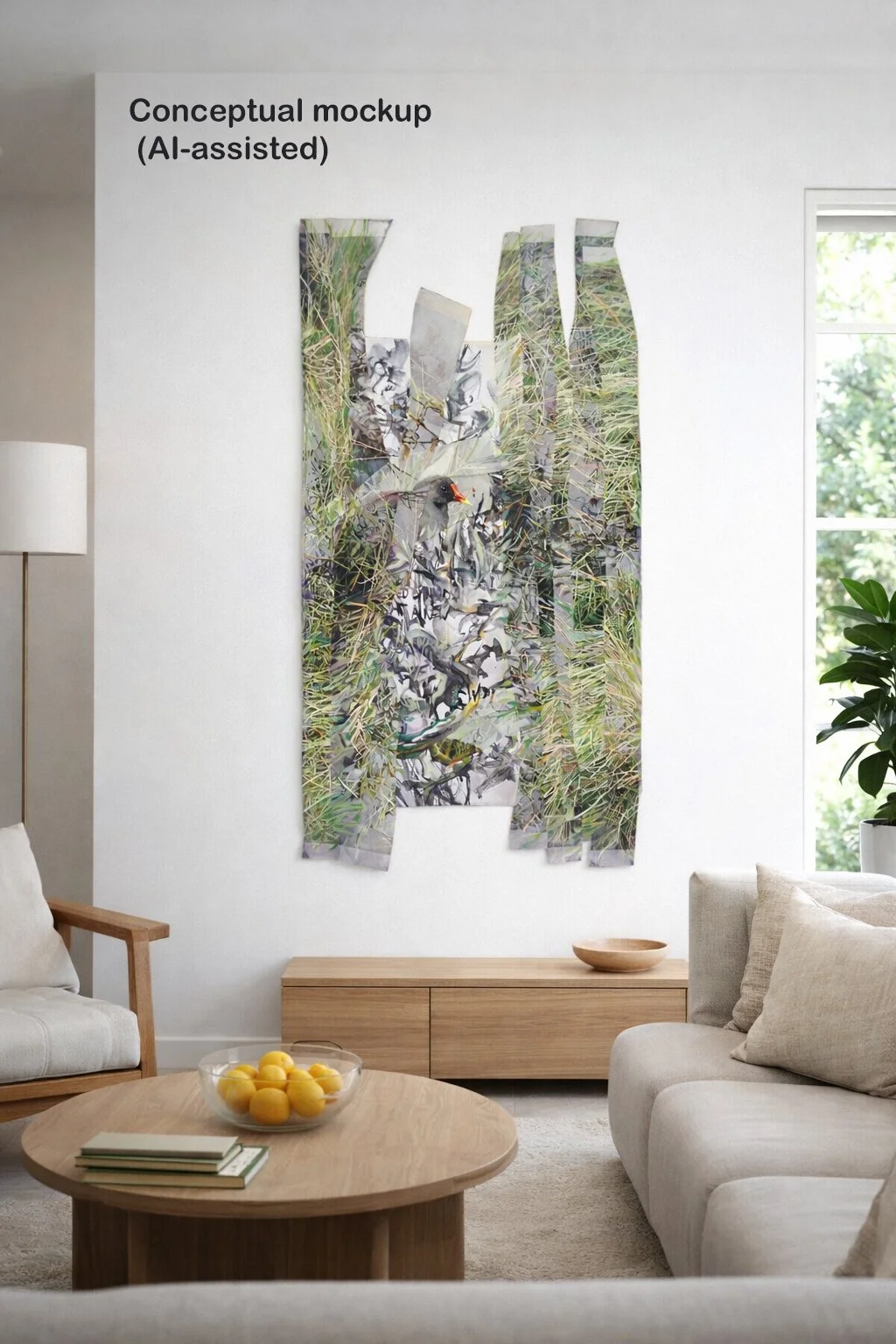
The following gallery includes artworks that emerge directly from the ongoing dialogue at the center of Como Caminamos. The collages and word clouds are not illustrations of the text, but parallel forms of thinking—ways of processing language, memory, and lived experience through visual means.
Across the work, moments of tension, grief, and rupture sit alongside color, texture, and growth. Rather than resolving these conditions, the pieces hold them together, allowing contradiction and complexity to remain visible.
The collages, developed by Jessica Monroe, extend her ongoing engagement with landscape while shifting toward an expanded understanding of people and culture as ecological systems. Forms are layered, disrupted, and reassembled, reflecting a way of seeing shaped through both place and dialogue—where human experience is understood as relational, interdependent, and in constant exchange.
The word clouds, developed by Daniel García Ordaz, approach language as a spatial and rhythmic field rather than a fixed narrative. Words move, cluster, and disperse across the page, allowing meaning to emerge through association, repetition, and tension. In this form, language does not proceed in a straight line, but remains open—capable of holding multiple directions and insights at once.
Through this process, the project has opened a shift in perception: an increasing awareness of people, communities, and cultures as interrelated systems—dynamic, layered, and dependent on one another. What begins in conversation moves outward into form, where fragments accumulate, overlap, and reorganize into something that could not have been planned in advance.
Invitation to community contributions
We invite community members to contribute short written responses, photographs, audio, or other forms of documentation related to the themes of the project. Selected contributions may be featured on this page, in future project documentation, and in related publications or presentations, with permission.
This project is built through shared experiences, voices, and materials. Thank you for contributing.
-
“What phrases do you remember from your childhood?”
“What do you think people get wrong about the RGV from an outsider’s perspective?” “What do you wish they would know?”
“What is emblematic of home- a smell, sound or taste you may not even miss when away, but feels like home when you return?”
“What scares you today?”
“What gives you hope?”
What does this place teach you?
What histories do you carry that shape how you move through the Valley?
How do language, family, or landscape shape your sense of self?
What feels overlooked but important in your community?
-
Participation & Submission
By submitting material to Como Caminamos, you confirm that the work is your own or that you have permission to share it.
Selected contributions may be featured on this website and may also be shared through social media, included in project documentation, or incorporated into future exhibitions or publications.
Submissions may be edited, recontextualized, or incorporated into new artworks (including collage, text, or installation) as part of the ongoing development of this project.
Contributors retain copyright to their original work.
Final artworks developed through this project remain the intellectual property of the artist.
Participation and submission are voluntary and unpaid.
Consent & Use
By submitting, you acknowledge and agree that your contribution may be used in both digital and physical formats connected to this project.
You may request removal of your work prior to publication or exhibition by contacting JMonroeArt@outlook.com.
Submitted materials will be stored securely and used only in relation to this project.
Credit Options
Contributors may choose:
Website display only
Website + social media
Website + future exhibition/publication/project documentation
You may also choose to be credited by name or remain anonymous.